
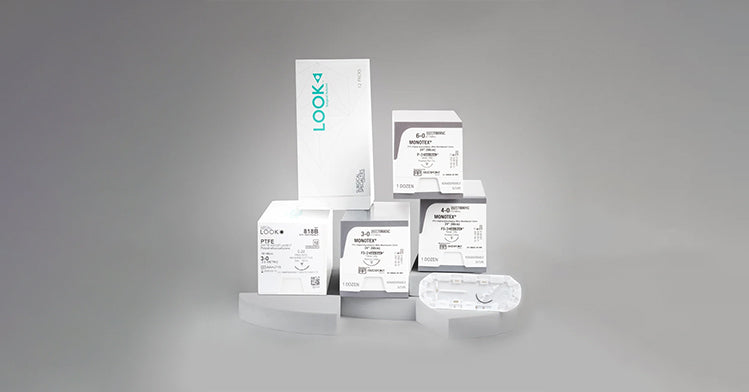
PTFE sutures are non-absorbable sutures commonly used in Canadian dentistry for implant surgery and guided bone regeneration. Their smooth surface, minimal tissue adherence, and low reactivity make them a suitable option for various dental procedures. ProNorth Medical stocks PTFE dental sutures for Canadian practices, with same-day dispatch on in-stock items.
What Are PTFE Sutures and What Makes Them Different?
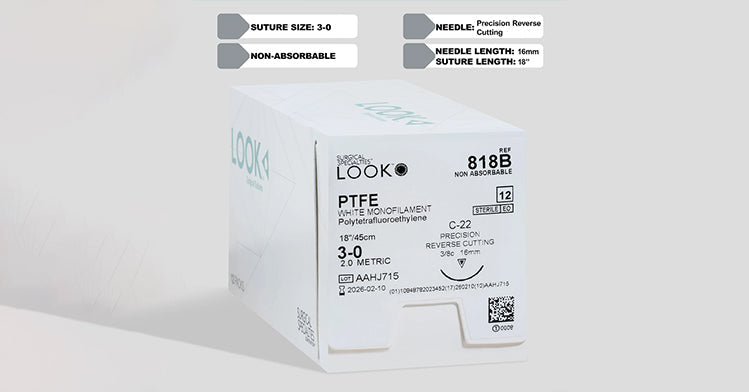
PTFE sutures are made from polytetrafluoroethylene, a synthetic fluoropolymer that is chemically inert and biologically non-reactive. The material was originally developed for industrial applications before being adapted for medical and dental use. In dentistry, PTFE suture is manufactured as a monofilament or expanded PTFE (ePTFE) strand with a smooth, non-adherent surface that does not bond with surrounding tissue during the healing period.
The defining characteristic of PTFE sutures in dental use is their ability to release cleanly from the surrounding tissue at the time of removal. Unlike silk, which wicks fluid along its braided structure and can adhere to healing tissue, PTFE remains free from the tissue surface. This makes it the material of choice when suture removal must not disturb the tissue or membrane beneath, as in implant and guided bone regeneration procedures.
PTFE sutures are listed under ProNorth Medical's non-absorbable sutures range, available in dental gauges and configurations for Canadian implant and periodontal practices.
Why Are PTFE Sutures the Preferred Choice for Implant Dentistry?
In implant dentistry, primary closure of the flap is critical to successful osseointegration. Any disruption to the suture closure during the healing period, including tissue adherence at the time of suture removal, can compromise the sealed environment protecting the implant site. PTFE's non-adherent surface prevents the suture from bonding with the overlying mucosa, allowing the clinician to remove it cleanly and precisely without pulling or tearing the fragile healing tissue.
PTFE is also monofilament, meaning it has a smooth continuous surface with no interstitial spaces where bacteria can accumulate and migrate toward the implant site. Braided non-absorbable sutures such as silk and polyester provide more surface area for bacterial colonization, making monofilament PTFE the lower-risk option in procedures where infection of the surgical site would have serious consequences.
Research on suture material selection in implant and regenerative dentistry, including comparisons of PTFE to silk and polyester, is documented in peer-reviewed sources available through the National Library of Medicine, supporting the clinical preference for PTFE in Canadian implant practice.
How Does PTFE Compare to Silk and Nylon in Dental Procedures?
PTFE, silk, and nylon are the three most commonly used non-absorbable sutures in Canadian dentistry, each with distinct characteristics suited to different procedure types. Understanding the differences allows clinicians to match material to procedure with greater precision.
|
Attribute |
PTFE |
Silk |
Nylon |
|
Surface structure |
Monofilament, non-adherent |
Braided, adherent |
Monofilament, smooth |
|
Tissue reactivity |
Very low |
Moderate (higher than synthetics) |
Low |
|
Bacterial wicking |
None |
Moderate (braided structure) |
None |
|
Tissue adherence |
Minimal (clean removal) |
Can adhere at removal |
Low |
|
Handling |
Stiff, requires more knots |
Excellent, pliable |
Good, less pliable than silk |
|
Recommended for |
Implants, GBR, membrane closure |
General dental, extractions, periodontal |
Skin closure, fine mucosal closure |
|
Removal timing |
10-14 days |
7-10 days |
7-14 days |
|
Available at ProNorth Medical |
Yes |
Yes |
Yes |
What Are PTFE Sutures Used for in Guided Bone Regeneration?
Guided bone regeneration (GBR) is a procedure used in implant dentistry to regenerate bone in areas of deficiency using barrier membranes that direct bone growth while excluding soft tissue. The membrane is placed over the defect site and must remain undisturbed throughout the healing period, which can be four to twelve months depending on the membrane type and defect size.
PTFE sutures are the standard closure material for GBR procedures in Canadian implant dentistry because they can maintain a sealed membrane environment for extended periods without the tissue adherence that would make removal difficult or damaging. When resorbable membranes are used, the PTFE suture may be removed once primary closure is confirmed, typically at 10 to 14 days. When non-resorbable membranes are used, the suture must remain until the membrane is retrieved.
The Royal College of Dental Surgeons of Ontario and equivalent provincial bodies in Canada recognize guided bone regeneration as a specialist procedure; PTFE suture selection in GBR follows the clinical guidelines established through specialty training programs and peer-reviewed evidence.
Canadian implant practices can source PTFE sutures in dental gauges through ProNorth Medical's dental sutures range with same-day dispatch on in-stock items.
What Gauges of PTFE Suture Are Used in Canadian Dental Practice?
PTFE sutures in Canadian dental practice are typically used in 4-0 and 5-0 gauges. 4-0 PTFE (approximately 0.15 mm diameter) provides adequate strength for flap closure in most implant and periodontal procedures. 5-0 PTFE (approximately 0.10 mm diameter) is preferred in areas requiring finer closure, such as around abutments in the anterior esthetic zone or in thin tissue.
PTFE requires more throws per knot than silk due to its lower coefficient of friction; a minimum of three to four square knots is typically recommended to ensure knot security. Clinicians transitioning from silk to PTFE should account for this during suturing and adjust their knot-tying technique accordingly. The Canadian Academy of Periodontology represents Canadian periodontal specialists and is a relevant professional reference for suture technique and tissue management in implant and periodontal surgery.
ProNorth Medical’s suture selection reference provides gauge-specific detail for dental procedures, including PTFE selection for implant and GBR applications.
How Should PTFE Sutures Be Handled and Stored?
PTFE sutures are non-absorbable and remain stable for the duration of their shelf life when stored in a clean, dry environment away from direct sunlight and extreme temperatures, as specified on the manufacturer packaging. They should be handled with standard sterile technique and not re-sterilized once opened, as re-sterilization may affect the suture surface and knot security.
When removing PTFE sutures, the clinician should cut the suture at one side of the knot and pull it through without dragging contaminated external portions through the tissue. This technique minimizes the introduction of surface bacteria into the healing wound and is standard practice for all non-absorbable monofilament suture removal. The Canadian Association of Oral and Maxillofacial Surgeons provides professional standards and continuing education for oral surgical specialists across Canada, including suture management in implant and GBR procedures.
Sourcing PTFE Sutures Through ProNorth Medical
ProNorth Medical was founded in 2011 by Robert Horne with more than 40 years of medical and dental supply industry experience. The ProNorth Medical team stocks PTFE dental sutures from recognized brands including Sharpoint and LOOK in the gauges and configurations used by Canadian implant and periodontal practices. Canadian clinics benefit from same-day dispatch on in-stock items, free shipping on orders over $1,250 CAD, and Monday to Friday 7 am to 7 pm PT support.
Contact ProNorth Medical to Source PTFE Sutures for Your Practice
ProNorth Medical is the trusted Canadian source for PTFE sutures in the gauges and configurations required by implant dentistry and guided bone regeneration procedures. Whether you are transitioning to PTFE from silk or replenishing an established PTFE inventory, the ProNorth Medical team is ready to help. Contact ProNorth Medical to discuss your PTFE suture requirements and take advantage of same-day dispatch on in-stock products.
Frequently Asked Questions
1. Why is PTFE preferred over silk for implant procedures?
PTFE is preferred over silk for implant procedures because its non-adherent monofilament surface does not bond with healing tissue, allowing clean removal without disrupting the implant site closure. Silk is a braided material that wicks fluid, provides more surface area for bacterial colonization, and can adhere to tissue, all of which increase the risk of interference with implant healing. PTFE and silk non-absorbable options are both available through ProNorth Medical's non-absorbable sutures range.
2. How many knots does a PTFE suture require?
PTFE sutures require a minimum of three to four square knots to achieve secure knot holding due to their low coefficient of friction compared to braided materials. Clinicians accustomed to silk should increase their standard knot count when transitioning to PTFE. ProNorth Medical’s PTFE suture handling resources cover knot technique and handling considerations for PTFE and other non-absorbable suture materials.
3. What gauge PTFE suture should Canadian dentists use for implant placement?
4-0 PTFE (approximately 0.15 mm diameter) is the most commonly used gauge for routine implant site closure in Canadian dental practice. 5-0 PTFE is preferred in finer tissue areas such as the anterior esthetic zone or where abutment proximity limits space. Both gauges are available through ProNorth Medical's dental sutures range with same-day dispatch on in-stock items.
4. How long should PTFE sutures remain in place after dental surgery?
PTFE sutures in implant and guided bone regeneration procedures are typically removed at 10 to 14 days post-placement, once primary closure of the wound is confirmed. This is slightly longer than the 7 to 10 day window for silk, reflecting PTFE's lower bacterial wicking and tissue adherence. For GBR with non-resorbable membranes, PTFE sutures may remain until membrane retrieval. Complete suture removal guidance for Canadian dental teams is covered in ProNorth Medical's absorbable sutures and non-absorbable resources.
5. Is expanded PTFE (ePTFE) different from standard PTFE suture?
Expanded PTFE (ePTFE) is a processed form of polytetrafluoroethylene with a microporous structure that gives it greater flexibility and tissue integration characteristics compared to standard PTFE monofilament. In suture applications, ePTFE is used in some specialist cardiac and vascular procedures. For dental use, standard PTFE monofilament suture is the most commonly available and clinically appropriate option. Both are available in various gauges through the suture selector on the ProNorth Medical website.
6. Can Canadian dental practices order PTFE sutures in bulk through ProNorth Medical?
Canadian dental practices can order PTFE sutures in bulk through ProNorth Medical with free shipping on orders over $1,250 CAD and same-day dispatch on in-stock items. Implant and periodontal practices with predictable procedure volumes benefit from ordering a two to three month PTFE supply in a consolidated transaction. Bulk ordering information is available through ProNorth Medical's bulk orders resources.
Key Takeaways
- PTFE (polytetrafluoroethylene) is a chemically inert, non-adherent monofilament suture material preferred in implant dentistry and guided bone regeneration.
- Its non-adherent surface allows clean removal without disrupting the healing implant site or membrane, making it the superior choice over silk and polyester in these applications.
- PTFE does not wick bacteria along its surface, which reduces the infection risk in procedures where contamination of the surgical site would compromise outcomes.
- 4-0 and 5-0 are the most commonly used PTFE gauges in Canadian dental practice; PTFE requires a minimum of three to four square knots for reliable knot security.
- PTFE sutures are typically removed at 10 to 14 days post-placement; for GBR with non-resorbable membranes, removal is timed to membrane retrieval.
- ProNorth Medical stocks PTFE dental sutures from Sharpoint and LOOK for Canadian implant and periodontal practices, with same-day dispatch and free shipping on orders over $1,250 CAD.


Leave a comment
This site is protected by hCaptcha and the hCaptcha Privacy Policy and Terms of Service apply.