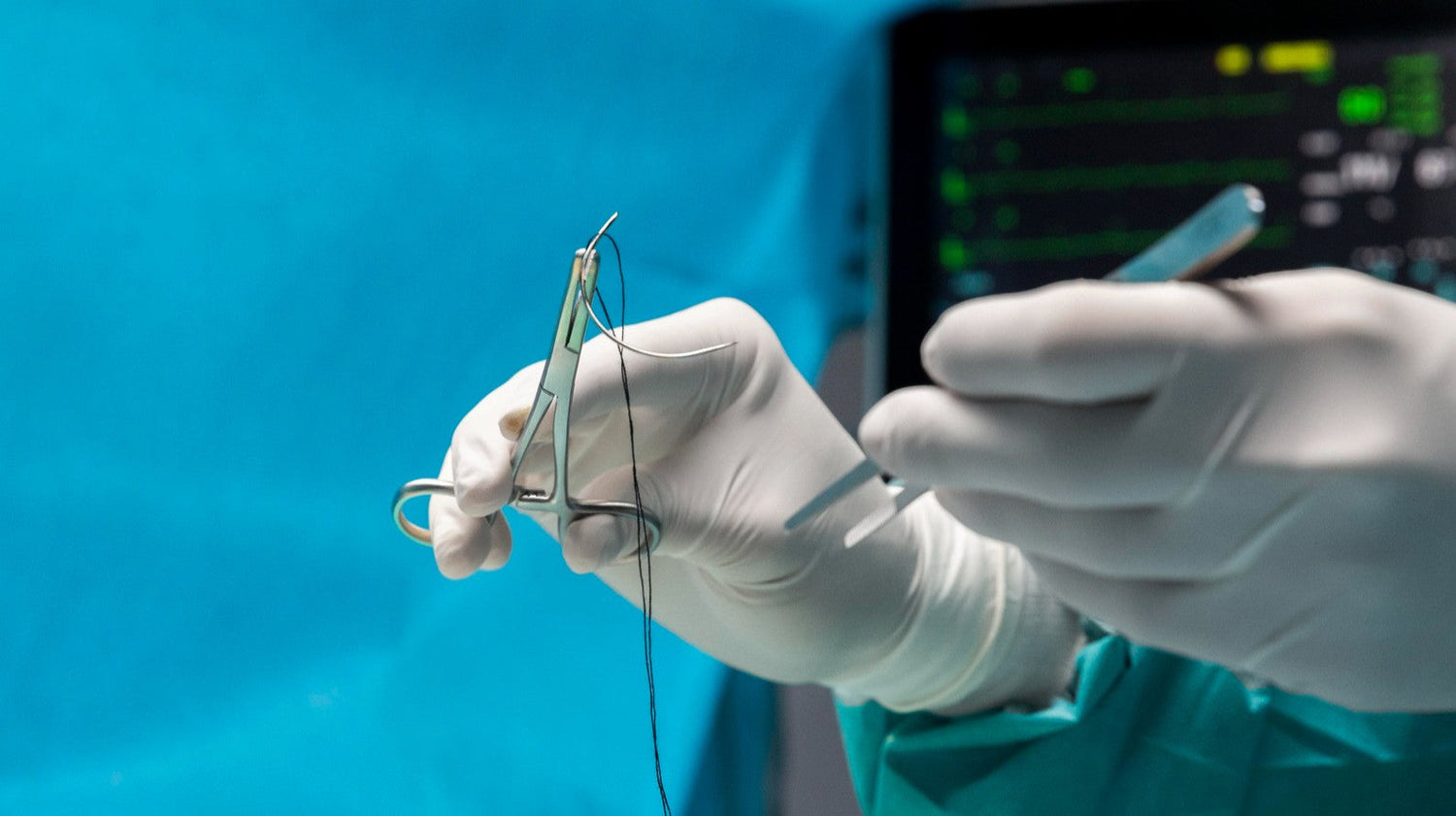
A suture needle type can make a simple closure feel easy or frustrating. When the curve or point is wrong for the tissue, you work harder, the tissue suffers more, and the wound can look worse in the end. When the needle is matched to the job, your hand relaxes, your bites are more consistent, and the closure looks clean.
In this article, we are focusing on needle curvature and point geometry, especially 3/8 vs 1/2 circle and taper vs cutting points. As procedure volume climbs in the Canadian spring and summer, with more elective cases, sports injuries, and outdoor trauma, a quick reset on needle choice can pay off in speed, comfort, and better outcomes for dentists and dental teams.
Mastering Needle Geometry for Safer, Cleaner Closures
Think of a common situation: a small facial laceration or a simple intraoral closure that should be quick. The suture is fine, but the needle is too straight, too long, or the wrong point. You need extra force to drive it, bites are uneven, and by the last stitch the tissue looks more bruised than it should.
Needle curvature and point design matter just as much as the suture material. They affect:
- How easily you can reach the target tissue
- How much force you need for each pass
- How cleanly the wound edges line up
For most dental, medical, and veterinary teams, the key comparison is between 3/8 and 1/2 circle needles, and between taper and cutting points. Once we understand these basics, we can choose a suture needle type that supports better control and smoother healing in daily cases, from skin and oral mucosa to deeper soft tissue.
How Needle Curvature Shapes Control and Access
Common surgical needle curvatures include 1/4, 3/8, 1/2, and 5/8 circle. In real-world practice, 3/8 and 1/2 circle needles do most of the work.
Here is how they differ:
- 3/8 circle: a gentler arc that works well in open, easy-to-see fields
- 1/2 circle: a tighter curve that shines in deeper, confined spaces
A 3/8 circle needle is a favorite for:
- Skin closures where you have space to move your wrist
- Oral mucosa in accessible areas
- Superficial soft tissue where visibility is good
It balances visibility and control. You can rotate the wrist smoothly, see both entry and exit points, and keep bite depth consistent. For many dentists, pairing a 3/8 circle reverse-cutting needle with quality dental and medical sutures is a go-to setup for routine lacerations and minor oral surgery.
A 1/2 circle needle has a tighter arc, so it turns more sharply with less hand movement. This is useful in:
- Deeper intraoral pockets
- Confined spaces where retractors limit motion
- Areas where you cannot pronate and supinate fully
With the right curvature, the needle follows a natural hand motion and you do not need to stretch tissue just to get through. That reduces hand fatigue, especially on long days when warm weather brings in more sports injuries and outdoor mishaps. It also helps keep a steady distance from the wound edge, which supports better approximation and less risk of dehiscence.
Taper vs Cutting Needle Points and When They Shine
Curvature gets you to the tissue; point geometry decides how the needle passes through.
Taper-point needles have a rounded, non-cutting tip that spreads fibers instead of slicing them. They are often used for:
- Muscle and fascia
- Subcutaneous layers
- Delicate or easily torn tissue such as some soft tissue flaps
Because they spread tissue, taper needles can mean less trauma and fewer microtears in deeper layers. They are not ideal for tough skin, but they are very comfortable in softer tissue planes.
Cutting needles have a triangular cross-section that cuts through tough tissue. Conventional cutting has the cutting edge on the inner curve. Reverse-cutting moves that cutting edge to the outer curve, which can reduce the risk of the needle cutting out through the wound edge, especially in dense tissue like:
- Skin
- Oral mucosa
- Tendon sheaths or dense fibrous bands
For dentists, reverse-cutting needles are helpful in small, wet fields where you need a strong, reliable bite on mucosa without tearing. In medical and veterinary surgery, taper needles are often preferred for delicate organs, while cutting needles handle the tougher structures. Having both types available in mixed fields, such as veterinary abdominal cases, gives flexibility in a single session under anesthesia.
For residents and associates, clear rules about when to pick taper vs cutting can shorten the learning curve and bring more consistent results across your team.
Matching Suture Needle Type to Procedure and Tissue
A simple way to think about needle choice is to ask three questions:
- What kind of tissue is this (delicate, dense, or fibrous)?
- Is the field superficial or deep, wide open or tight?
- Is our main priority cosmetic, strength, or speed?
Here are some practical pairings for busy dental and surgical clinics:
- Skin and oral mucosa: 3/8 or 1/2 circle reverse-cutting needles for strong edge capture and clean wound edges in facial and oral lacerations
- Deep soft tissue and fascia: 1/2 circle taper needles for controlled passage and less tearing in deeper layers
- Tight intraoral spaces: 1/2 circle cutting needles where space is limited but tissue is dense
- Mixed veterinary fields: both 3/8 and 1/2 circle needles in taper and cutting points ready so skin, muscle, and organ closures can all be addressed in one procedure
Standardizing needle choices by procedure supports faster setups, easier teaching, and smoother inventory control. Many teams pair their suture sets with other closure tools like appropriate skin staplers so they always have the right option ready before a busy shift.
Reducing Tissue Trauma and Improving Cosmetic Results
Every extra bit of force on a needle pass means extra trauma to the tissue. When the needle size, curvature, and point match the tissue, the pass feels smooth and the track is clean. This can mean:
- Less inflammation and irritation
- Lower risk of microtears
- More comfortable healing for the patient
Curvature and point also affect how the scar looks. A suitable arc helps you keep:
- Even tension across the wound
- Symmetric bites on both sides
- Less edge inversion or eversion
Taper needles in the deeper layers can reduce visible track marks, while reverse-cutting needles, used with care in the skin, can help you line up edges precisely.
Common pitfalls include:
- Using cutting needles in very fragile tissue and causing tears
- Using taper needles in dense skin and needing so much force that the needle bends or the tissue crushes
Better needle selection can mean cleaner wounds, faster healing, and patients who feel happier about how exposed areas like the face and extremities look during summer. For clinicians, that can also mean fewer re-sutures and more predictable follow-up visits.
Attention to ergonomics matters here too. Pairing smart needle choices with ergonomic seating, such as a supportive saddle stool, can reduce strain over long closure sessions, especially in dental and surgical settings where posture can suffer.
By taking a little time to think through curvature and point geometry for each common procedure, we can turn needle choice from a habit into a quiet advantage for control, comfort, and patient-centered outcomes.
Choose the Right Suture Needle Type for Better Control and Outcomes
Now that you understand how curvature and point geometry affect handling and tissue response, put that knowledge to work with the right supplies. At ProNorth Medical, we stock a wide range of sutures and instruments so you can match each case to the most appropriate suture needle type. Whether you are fine-tuning wound edge precision or reducing tissue trauma in delicate procedures, we are here to support your clinical decisions with reliable products and fast Canadian shipping. Explore your options today and give your team the control and consistency they need case after case.


Leave a comment
This site is protected by hCaptcha and the hCaptcha Privacy Policy and Terms of Service apply.